
Link building for ecommerce is pretty simple in theory: it’s the art of getting links from other websites back to your online store. In practice, it's one of the most powerful signals you can send to search engines like Google, telling them your shop is a credible authority in its space. Getting this right is absolutely critical for climbing the search rankings, driving high-quality organic traffic, and building the kind of brand trust that fuels real, sustainable growth.
Why Backlinks Are Your Ecommerce Growth Engine
So many ecommerce stores fall into the same trap: they pour their entire marketing budget into paid ads. Sure, ads give you that initial rush of traffic, but the second you turn off the spending, the traffic vanishes. It’s a relentless, expensive cycle that offers very little long-term value.
Strategic link building is the perfect antidote to this dependency.
Think of every high-quality backlink as a vote of confidence from a respected site in your niche. When a popular industry blog or a product review site links to one of your product pages, it’s basically telling Google, "Hey, this store is a trustworthy expert on this topic." These endorsements are a huge factor Google uses to decide which pages deserve to rank at the top.
The True Value of Organic Authority
The more of these authoritative "votes" you collect, the higher your product and category pages will climb in the search rankings. This brings in a steady, reliable stream of organic traffic—visitors who are actively searching for the exact products you sell.
Unlike paid traffic, this audience shows up with built-in intent and trust, which almost always leads to higher conversion rates. A strong backlink profile is a sustainable asset that works for you 24/7, generating leads and sales without you having to constantly feed the ad machine.
In the cutthroat world of ecommerce, organic search—powered by a smart link building strategy—accounts for a massive 23.6% of all orders. For many stores, this means organic channels can easily outpace paid search in total traffic share while being far more cost-effective in the long run.
Ecommerce Traffic Channels A Quick Comparison
To really see the difference, it helps to put the most common traffic channels side-by-side. While each has its place, the long-term return from organic search is in a league of its own.
| Traffic Channel | Primary Strength | Cost Model | Long-Term Value |
|---|---|---|---|
| Paid Ads (PPC) | Immediate traffic and visibility. | Pay-per-click; high, ongoing cost. | Low. Traffic stops when you stop paying. |
| Organic Search (SEO) | Builds lasting authority and trust. | Upfront investment in time and content. | High. Creates a sustainable traffic asset. |
The takeaway here is that while ads rent you an audience, link building helps you earn one.
The crucial difference is that link building creates a powerful, self-sustaining growth engine. The authority you build today continues to drive sales for years, delivering a return on investment that paid ads simply cannot match. It’s the foundation for building a resilient, profitable ecommerce brand.
Trying to build links to an ecommerce site that isn't ready is like trying to fill a leaky bucket. Before you even think about sending your first outreach email, you need to make sure your online store is a place that journalists, bloggers, and industry experts actually want to link to.
This foundational work is what separates just another online shop from a polished, authoritative resource. When another site links to you, they're putting their own credibility on the line. A slow, confusing, or poorly designed store makes them—and you—look bad.
Mastering Your On-Page Essentials
Your product and category pages are the real prize when it comes to link building. Let's be honest: generic, manufacturer-provided descriptions and a handful of bullet points just won't cut it. To attract high-quality links, these pages need to be the absolute best-in-class resources for what you sell.
Imagine you sell high-end coffee beans. A standard product page might just list the origin and the roast. A truly link-worthy page, however, will tell a story. It should feature things like:
- Unique, Compelling Descriptions: Go way beyond the basics. Talk about the farm where the beans were grown, detail the specific tasting notes like "hints of dark chocolate and cherry," and even suggest the ideal brewing methods.
- High-Quality Visuals: Professional photos from multiple angles are a must. Better yet, include a short video of the beans being roasted or brewed.
- Customer Reviews and FAQs: Social proof builds trust instantly, and a good FAQ section adds valuable content that makes the page a more complete resource for shoppers and potential linkers alike.
This same mindset applies to your category pages. Instead of a boring grid of products, add a helpful introduction that explains the key differences between, say, a light roast and a dark roast. That extra context adds real value and gives other sites a solid reason to point their audience your way. For a deeper dive, check out our complete guide to on-page optimization.
A great product page doesn't just sell; it educates and inspires. When you create a page that is the single best resource for a specific item, other sites will naturally see it as a valuable reference for their own audience.
Conducting a Mini Technical Health Audit
Technical problems are the silent killers of link building campaigns. A technically sound website is a non-negotiable sign of quality and professionalism. If a blogger clicks over to your site and it takes ten seconds to load or looks completely broken on their phone, you've lost their trust in an instant.
Your mini-audit should focus on three core areas that have a massive impact on both user experience and how search engines see your site.
Checklist for a Healthy Technical Foundation
- Site Speed: How fast your pages load is a critical ranking factor. Use a tool like Google's PageSpeed Insights to test your key pages. Your goal should be a load time of under 3 seconds—anything slower risks losing visitors and potential linkers.
- Mobile Experience: With a huge chunk of web traffic coming from phones, your site has to be fully responsive and a breeze to navigate on a small screen. Check for tiny buttons that are impossible to tap or text that forces users to pinch and zoom.
- Logical URL Structure: Clean, readable URLs are better for everyone. A clear structure like
/mens-shoes/running/product-nameis far superior to a messy, parameter-filled URL like/cat?id=521&prod=9987. A good URL communicates the page's content at a glance.
Fixing these foundational elements ensures that when you do earn that amazing link, the traffic lands on a site that's fast, reliable, and professional. This not only maximizes the SEO value of the backlink but also boosts the chances that the visitor will actually convert into a customer—which is the ultimate goal of any link building ecommerce campaign.
Alright, with a solid foundation in place for your ecommerce store, we can shift from prep work to actually getting out there and earning links. Theory is great, but real growth comes from putting proven, retail-specific strategies into action. Let's get into the tactics that will pull in high-quality backlinks, drive the right kind of traffic, and build your store’s authority.
Before we jump in, let's talk about why this matters so much. When done right, link building can deliver a staggering ROI of 200-400% over a year for competitive commercial keywords. It’s no wonder 68% of marketers call it their most important SEO tactic. By focusing on smart, white-hat methods, you can tap into that same potential.
This visual lays out the foundational steps we've covered—on-page SEO, technical health, and site audits—which get your store ready for a real link building push.
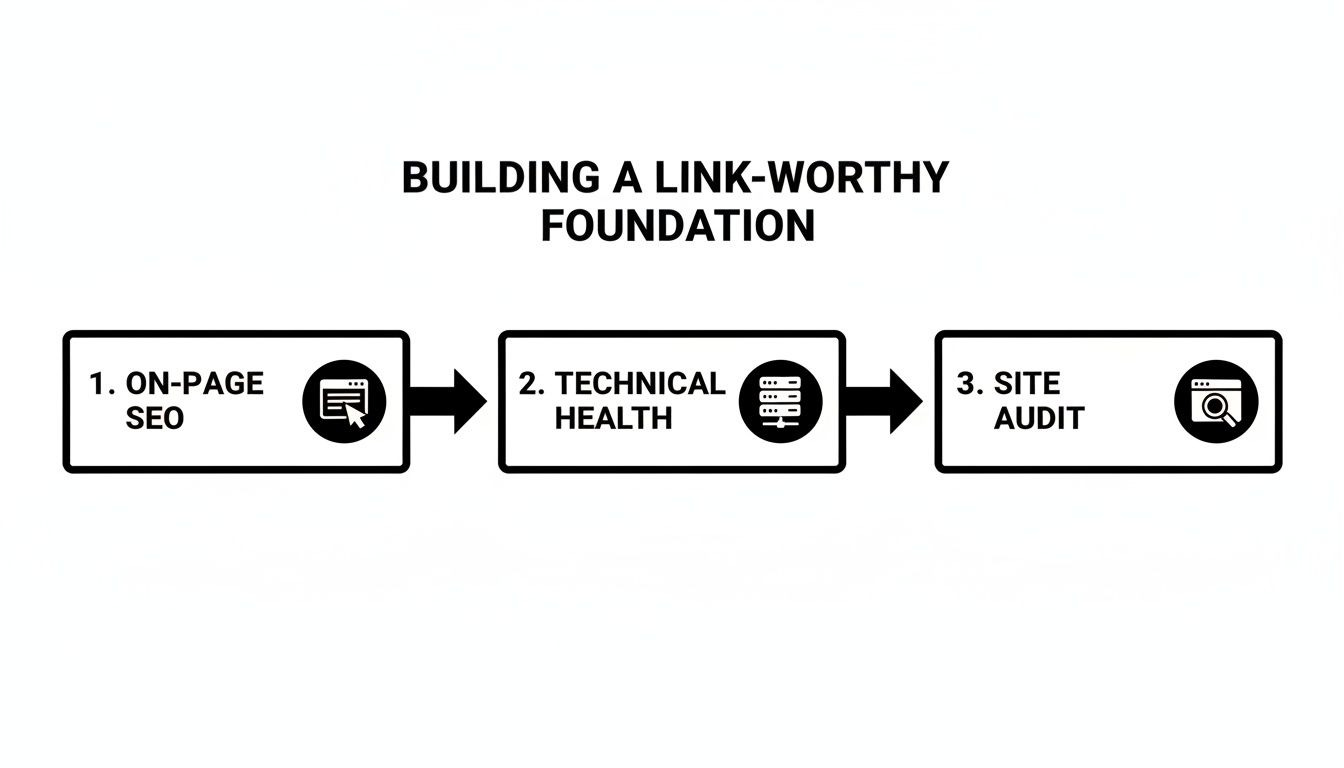
This process ensures that when you do earn that awesome backlink, the people who click it will land on a fast, professional site they can trust, which is exactly how you turn traffic into sales.
Create Indispensable Linkable Assets
The absolute cornerstone of any successful link building ecommerce campaign is creating what we call "linkable assets." These are high-value pieces of content so useful, insightful, or unique that other websites genuinely want to link to them to help their own audience.
Instead of just crossing your fingers and hoping someone links to a product page, you proactively build the definitive resource that becomes a magnet for backlinks. A key part of any serious strategy is focusing on earning high authority links from respected sites in your niche, and these assets are how you do it.
Here are a few types of linkable assets that work like a charm for ecommerce stores:
- Definitive Buyer's Guides: Don't just write a blog post. Create a massive, deeply-researched guide that answers every conceivable question a customer might have before they buy.
- Data-Driven Comparison Posts: If you sell products that compete, create an honest, data-backed comparison. Use charts, tables, and real performance numbers to show the pros and cons, positioning your site as a trustworthy expert.
- Interactive Tools or Calculators: Build a simple tool that helps your audience solve a problem. A shop selling homebrewing kits could create a "Beer Recipe Calculator," while a gardening store could offer a "Planting Zone Finder."
Real-World Scenario: A Shopify store selling high-end kitchen gadgets saw a spike in people searching for artisan bread making. They didn't just write another blog post. They created "The Ultimate Guide to Artisan Bread Making at Home," a 5,000-word monster guide with video tutorials, a printable sourdough starter schedule, and an interactive tool for calculating dough hydration.
They pitched this guide to food blogs and baking communities, not as a sales pitch, but as a genuinely helpful resource for their readers. The result? Dozens of high-authority backlinks, a flood of targeted organic traffic, and a huge boost in sales for their bread-making gear.
Uncover Overlooked Supplier and Manufacturer Links
One of the most powerful—and most underused—link building opportunities for ecommerce stores comes from your own business partners: your suppliers and manufacturers. These companies often have "stockists," "where to buy," or "dealers" pages on their websites, and getting your store listed is often as simple as just asking.
These links are absolute gold for a few reasons:
- High Relevance: The link comes from a site directly related to the products you sell, a massive relevancy signal for Google.
- Built-in Authority: Many manufacturers have established, authoritative websites with strong link profiles of their own.
- Referral Traffic: People on a manufacturer's site are often high-intent buyers looking for a place to make a purchase, making this a great source of traffic that actually converts.
Start by making a list of every brand you carry. Go to their websites and look for a dealer locator or stockist page. If you find one and your store isn't on it, reach out to your sales rep or their marketing team.
Your email can be short and sweet:
"Hi [Contact Name],
We're a proud retailer of [Brand Name] products and have seen great success with them at our store, [Your Store Name].
I saw you have a 'Where to Buy' page on your website and was hoping you'd consider adding a link to our online store. You can find us here: [Your URL].
Thanks for your time and for the great partnership!"
This simple, scalable tactic can land you dozens of high-quality backlinks with very little effort. It's all about leveraging the relationships you already have to build your online authority. To learn more about this and other methods, explore our detailed guide to a successful link acquisition strategy.
Mastering Outreach and Building Real Relationships
Creating a fantastic, link-worthy asset is only half the battle. If nobody discovers it, it might as well not exist. This is where effective outreach comes in—the human-powered process of getting your content in front of the right people who can give it the signal boost it deserves.
Let’s be clear: the old method of blasting out hundreds of generic, templated emails is dead. Today's successful link building ecommerce strategies are built on genuine relationships, not transactional link drops. The goal is to move from cold outreach to warm collaborations that benefit both you and your new partner.
The Psychology of a Successful Pitch
Before you even think about opening your email client, you need to shift your mindset. Stop thinking, "What can I get?" and start asking, "What can I offer?" Every editor, blogger, or site owner you contact is busy. Your email is an interruption unless you immediately prove you're there to help.
A winning pitch really boils down to three simple principles:
- Personalization: Show you've actually done your homework. Mention a recent article they wrote, compliment their site's design, or reference a point they made on social media. Generic flattery is obvious; specific praise shows you're paying attention.
- Value First: Clearly explain why your link or content benefits their audience. Don't just ask for a link. Offer a better resource, an updated statistic, or a more comprehensive guide that actually improves their existing page.
- Brevity and Clarity: Get straight to the point. Say who you are, what you're offering, and why it matters in as few words as possible. A long, rambling email is a one-way ticket to the trash folder.
The most effective outreach feels less like a request and more like a helpful suggestion from a peer. When you frame your pitch as a way to improve their content, you instantly change the dynamic from a transaction to a collaboration.
Crafting Outreach Emails That Actually Get Replies
Once you've got the right mindset, you can start crafting emails that people will actually open and read. Let's walk through a real-world example for a broken link building opportunity.
Imagine your ecommerce store sells sustainable home goods, and you just published an in-depth guide to zero-waste kitchens. You find a popular lifestyle blog with a "Beginner's Guide to Eco-Friendly Living" that has a broken link to an outdated article on a similar topic. This is your chance.
Here’s how you could structure that email:
Subject: A broken link on your eco-friendly guide
"Hi [Blogger's Name],
I'm a huge fan of your blog—your recent post on DIY natural cleaners was fantastic!
I was just reading your guide to eco-friendly living and noticed that the link to the 'zero-waste kitchen basics' article isn't working anymore.
We actually just published a comprehensive, up-to-date guide on that very topic, complete with a printable checklist. It might be a great, working replacement for your readers.
No pressure at all, but thought it might be helpful!
Best,
[Your Name]"
This email is short, personalized, and genuinely helpful. It provides an immediate solution and respects the recipient's time, making it far more effective than a generic template. You can find more tips on this approach in our guide to the essentials of SEO guest posting.
A Simple Workflow for Tracking and Follow-Ups
Staying organized is what separates a handful of successful emails from a scalable, repeatable link-building machine. You don't need fancy software to get started; a simple Google Sheet is more than enough.
Your tracking sheet should have columns for the essentials:
| Target Website | Contact Person | Contact Email | Tactic Used | Date 1st Email | Date Follow-Up | Status |
|---|---|---|---|---|---|---|
| EcoLivingBlog.com | Jane Doe | jane@… | Broken Link | 10/15/2024 | 10/22/2024 | Replied! |
| GreenHomeWeekly | Mark Smith | mark@… | Guest Post | 10/16/2024 | No Reply |
This simple system helps you see who you've contacted, when you should follow up (a single, polite nudge after a week is standard practice), and the results of your hard work. To streamline this process and find the right contacts more efficiently, you might explore how marketers can build a lead list automatically for their campaigns.
By combining that critical human touch with smart organization, you can build a powerful, relationship-driven link building engine.
Measuring Link Building Success and ROI
Building links without tracking what happens next is like running a marketing campaign with your eyes closed. You're putting in all the work, but you have no real idea if you're getting any closer to your actual destination: more traffic and more sales.
To turn your link building ecommerce efforts from a hopeful tactic into a predictable growth channel, you have to measure what matters.
This means moving beyond simple vanity metrics, like just counting the number of new links you've built. While that's a decent starting point, the real value is in connecting your work to tangible business outcomes. Are those new backlinks actually driving qualified traffic to your product pages? Are they boosting the organic rankings for your most profitable categories?
The goal here is to prove that your investment is paying off. A data-driven approach lets you double down on what’s working, stop wasting time on what isn’t, and show the true value of your SEO work to your team or stakeholders.
Key Performance Indicators That Matter for Ecommerce
For any online store, success isn't just about rankings; it's about revenue. Plain and simple. Your measurement framework needs to reflect that by tracking a smart mix of SEO metrics and actual business results. Tools like Google Analytics and Semrush are non-negotiable for gathering this data.
Here are the core KPIs you should be glued to:
Referring Domain Growth: Keep a close eye on the number of unique, quality websites linking to your store. A steady climb in referring domains is a much stronger signal of authority than getting a dozen links from the same exact site.
Organic Traffic to Key Pages: Is that link building campaign for "women's running shoes" actually bringing more organic visitors to that specific category page? Isolate and monitor these pages in Google Analytics to see a direct cause-and-effect.
Keyword Ranking Improvements: Track the SERP positions for the primary keywords tied to the pages you're building links to. Moving from the bottom of page two to the top of page one can have a massive impact on your store’s visibility and sales.
Referral Traffic: A great backlink doesn't just pass SEO value; it sends real, interested shoppers to your store. Monitor the "Referral" section in Google Analytics to see which specific links are driving actual clicks.
Remember, the ultimate goal is to see a lift in conversions and revenue from the organic channel. By correlating increases in the KPIs above with your sales data, you can start to calculate the true return on investment of your link building.
Building a Simple Reporting Framework
You don't need a crazy-complex dashboard to get started. A simple spreadsheet or a custom report in Google Looker Studio can be more than enough to communicate your progress effectively.
The key is to track the right metrics that connect your link building activities directly to ecommerce success. Here's a breakdown of the essentials.
Essential Ecommerce Link Building KPIs
| Metric | What It Measures | Tool to Use | Why It Matters for Ecommerce |
|---|---|---|---|
| Backlink Profile Growth | The rate of new referring domains acquired over time. | Semrush, Ahrefs | Shows consistent growth in your site's authority and trust signals. |
| Organic Traffic Lift | Increases in non-paid traffic to targeted product/category pages. | Google Analytics 4 | Directly links SEO efforts to more potential customers on key sales pages. |
| SERP Position Change | Improvements in keyword rankings for your most valuable terms. | Rank Math, Semrush | Higher rankings lead to more clicks and a larger share of organic traffic. |
| Conversion Rate (from Organic) | The percentage of organic visitors who make a purchase. | Google Analytics 4 | Measures the quality of the traffic and its direct impact on revenue. |
Having a clear framework like this helps you tell a story with your data, showing exactly how link building is moving the needle. It's especially critical when you consider that 43% of all ecommerce traffic comes from organic search. To capture that traffic, you have to rank high—the top search result gets 27.6% of all clicks, while positions on the second page get less than 1%.
By consistently tracking these metrics, you can refine your strategy, prove your worth, and build a powerful, data-driven growth engine for your store. To get a handle on where you stand right now, it’s always helpful to understand how to check backlinks in Google as a solid starting point.
Common Questions About Ecommerce Link Building
Even with a solid strategy, questions always pop up. The world of SEO can feel murky, especially when you’re busy running your actual business.
This is where we clear the air. We’ll tackle the most common questions and sticking points we hear from ecommerce entrepreneurs about link building, giving you clear, straightforward answers.
How Many Backlinks Does My Ecommerce Store Need to Rank?
There’s no magic number. A single, powerful backlink from a highly respected industry publication is worth a hundred low-quality links from irrelevant directories.
Success in link building for ecommerce is all about the quality and relevance of your links, not the sheer quantity.
Instead of chasing an arbitrary count, a much smarter move is to analyze the backlink profiles of the top-ranking competitors for your most important keywords. A tool like Semrush can give you a realistic benchmark for what it takes to compete in your specific niche.
The real goal isn't to hit a specific number of links. It's to create a steady, natural pattern of acquiring high-authority links over time. This sustainable growth is what signals true credibility to search engines.
Is It Safe to Buy Backlinks for My Shopify Store?
Let me be crystal clear: no. Buying backlinks is a high-risk gamble that directly violates Google's Webmaster Guidelines.
It might seem like a tempting shortcut, but the potential damage isn't worth it. Getting caught—and Google's algorithms are exceptionally good at sniffing out unnatural link schemes—can lead to severe penalties, a dramatic drop in rankings, or even getting your store wiped from search results entirely.
Instead of buying links, invest that budget into activities that earn them the right way. This includes:
- Creating killer content that other sites genuinely want to reference.
- Doing manual, personalized outreach to build real relationships with bloggers and journalists.
- Investing in digital PR to get your brand and products featured in relevant publications.
This is the path to building sustainable authority that delivers lasting SEO results without putting your entire business on the line.
How Long Does It Take for Link Building to Show Results?
Link building is a long-term investment, not an overnight fix. While you might see some small, positive signals within a few weeks, it typically takes 3 to 6 months to see significant, measurable improvements in your organic traffic and keyword rankings.
The timeline really depends on a few things: your store's current domain authority, how competitive your niche is, and the quality of the backlinks you're building.
Patience and consistency are your greatest allies here. The links you work so hard to build today are an investment that will continue to pay dividends in organic traffic and sales for years to come.
What Is the Difference Between Follow and Nofollow Links?
Understanding this distinction is key to evaluating your backlink profile. A "follow" link is the standard type of link; it passes authority (often called "link equity" or "link juice") from the linking site to yours. Think of it as a direct vote of confidence that gives your SEO a boost.
A "nofollow" link, on the other hand, has a special tag that tells search engines not to pass that authority along. These are often found in blog comments, social media posts, and forum signatures.
While nofollow links don't directly improve your rankings, they are still valuable for your ecommerce store. They can drive a ton of referral traffic, build brand awareness, and help create a diverse, natural-looking backlink profile—which is a positive signal to Google in its own right.
Ready to stop guessing and start growing your organic traffic? The team at Website Services-Kansas City specializes in creating powerful, white-hat link building strategies that drive real results for ecommerce businesses. Contact us today for a free SEO audit and discover your store's hidden potential.
