
Let's get one thing straight. While nofollow links don't pass ranking authority the way dofollow links do, they absolutely help your SEO. It just happens in a more roundabout, powerful way.
Think of it like this: a dofollow link is a direct, personal referral from one business owner to another. It carries immediate weight and boosts your reputation instantly. A nofollow link is more like a public shout-out from a respected figure—it might not be a formal referral, but it drives brand awareness, builds credibility, and most importantly, sends real, interested people your way.
Why Nofollow Links Still Matter for SEO
For a long time, the SEO world treated nofollow links like second-class citizens, only good for the occasional click. The old thinking was simple: they didn't pass "link juice," so they didn't help you rank. End of story.
But that black-and-white view is completely outdated now. The real answer to do nofollow links help SEO is a firm yes. Their value comes from indirect benefits that build a stronger, more resilient online presence for your business.
Today, Google wants to see a backlink profile that looks natural and diverse. A portfolio made up of only dofollow links just doesn't look right—it can seem manipulative, like you're trying too hard to game the system. A healthy mix of both link types is what signals to search engines that your links are being earned organically, not just aggressively built.
Before we go deeper, it's helpful to see the two link types side-by-side. This table breaks down the core differences in a way that's easy to digest.
Nofollow vs Dofollow Links at a Glance
This is a quick comparison for business owners to understand the fundamental differences and SEO roles of each link type.
| Attribute | Dofollow Links | Nofollow Links |
|---|---|---|
| Primary SEO Role | Directly passes ranking authority ("link equity") from one site to another. | Does not pass direct ranking authority; acts as a "hint" for search engines. |
| Impact on Rankings | A direct and powerful ranking signal. The gold standard for link building. | Indirect benefits like referral traffic, brand signals, and link diversity. |
| How Search Engines See It | A strong "vote of confidence" or endorsement. | Tells search engines to not associate your site with the linked-to page for ranking purposes. |
| Typical Use Cases | Editorial links in articles, guest posts, partner websites, high-quality directories. | Paid links (sponsored content), user-generated content (comments, forums), social media links. |
| Link Profile Signal | Signals authority and trust. Too many can look unnatural if not balanced. | Signals a natural, organic link profile that isn't overly manipulated. |
As you can see, both have their place in a modern SEO strategy. One isn't "good" and the other "bad"—they just serve different purposes. Now, let's talk about a huge shift that made nofollow links even more important.
The Shift from Directive to Hint
A major change happened back in March 2020 when Google officially started treating the nofollow attribute as a "hint" instead of a strict command. This means search engines can now choose to use these links for crawling, indexing, and even as a potential ranking signal in some cases.
This evolution completely changes the game. It underscores their growing importance and why you can't afford to ignore them anymore.
The old rules are gone. Ignoring nofollow links means leaving valuable traffic, brand authority, and link diversity on the table. A modern SEO strategy embraces every opportunity to build a credible and natural backlink profile.
Nofollow Links Are a Natural Part of the Web
The data backs this up, too. Nofollow links are a huge part of what makes a high-performing website's backlink profile look natural.
According to a comprehensive analysis, a solid 10.6% of all backlinks pointing to the top 110,000 sites are nofollow. This isn't some tiny fraction; it's a clear sign that successful, authoritative sites have a healthy, natural mix of link types. For a deeper look at the numbers, you can explore more SEO statistics to see just how much link profiles have evolved.
Understanding Nofollow Links and Their Evolution
To really get why nofollow links matter for SEO, you have to know their story. The rel="nofollow" attribute wasn't born as some complex ranking tool. It started as a simple, blunt instrument to fight the absolute flood of spammy blog comments back in the early 2000s. Its job was straightforward.
Think of it like a bouncer at a club with a very strict guest list. For years, the original rel="nofollow" tag told search engine crawlers, "Don't follow this link. Don't pass any of my site's authority or 'link juice' through it. End of story." This was a rigid command, a directive that the SEO world treated as law.
The Game-Changing Shift from Directive to Hint
But the internet grew up, and so did Google. In 2019, Google dropped a bombshell that completely redefined the role of nofollow links. It was no longer a strict command. It was now a flexible "hint."
This pivot meant that while a nofollow link still signals that you don't want to pass direct authority, Google now has the final say. It reserves the right to look at the link's context and can choose to follow it for crawling and indexing purposes. It might even use it as a ranking signal, especially if that link comes from a highly authoritative source.
This timeline really drives home the shift from a hard-and-fast rule to a more nuanced suggestion.
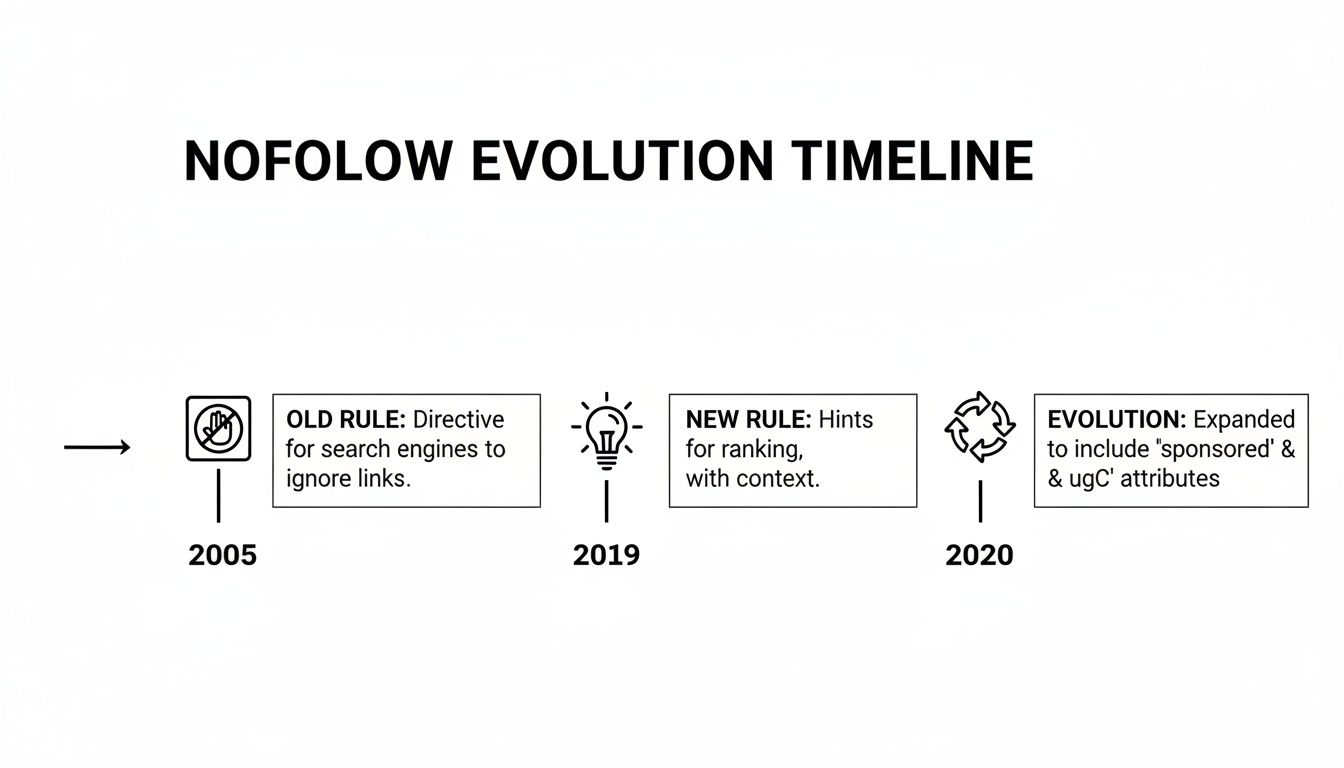
This evolution proves that search engines now treat nofollow links with a lot more sophistication. They get that not all nofollows are created equal.
Expanding the Vocabulary with Sponsored and UGC
Right alongside this update, Google rolled out two new attributes to give us more specific ways to label our outbound links. This helps search engines get a much clearer picture of why a link exists.
rel="sponsored": This tag is your go-to for any link that’s part of an ad, sponsorship, or any other kind of paid deal. It’s all about transparency for commercial links.rel="ugc": Short for "User-Generated Content," this one is perfect for links created by your visitors, like in blog comments or forum posts.
These new attributes, combined with the new "hint" model for
nofollow, completely changed the conversation. The question isn't just "do nofollow links help SEO?" anymore. It’s "how do all these different types of links work together to build a healthy, natural online footprint?"
This modern view is backed by the pros. For example, a whopping 89% of link builders believe nofollow links do impact search rankings. For an e-commerce store or a new LLC just starting out, this means that mixing natural nofollow links into your backlink profile is crucial. It helps you mimic an organic growth pattern, keeping you from getting flagged for unnatural, dofollow-only strategies. You can check out the full survey and discover more link building insights to see how the experts are adapting.
How Nofollow Links Indirectly Boost Your SEO
It’s easy to get hung up on the fact that nofollow links don’t pass direct ranking authority. But fixating on what they don't do is a classic rookie mistake. The real power of nofollow links lies in the strategic, indirect advantages they offer.
Think of them less like a direct ranking signal and more like a catalyst for growth. They might not be the engine, but they can absolutely be the spark that gets everything moving. Once you understand how they work, you can stop asking "do nofollow links help SEO?" and start using them as a smart part of your overall strategy.
Driving High-Value Referral Traffic
The most immediate and tangible benefit of a nofollow link is its ability to send real, interested people straight to your website. A well-placed link on a high-traffic forum, a popular blog, or a major news site—even if it's nofollowed—is a direct pipeline to potential customers.
Practical Example: A Kansas City roofing company shares a helpful guide on "Choosing the Right Shingles for Midwest Weather" on a popular local home improvement forum. The link is nofollow, but homeowners preparing for a project click through. This traffic is highly qualified and more likely to request a quote than general search traffic.
This isn't just any old traffic; it's referral traffic. These visitors are often far more engaged and likely to convert because they’re arriving from a source they already know and trust. Google pays close attention to these user engagement signals. When people click a nofollow link, land on your site, and stick around to read your content, it sends a clear message that your website offers real value.
Building Unmistakable Brand Authority
Getting your brand mentioned on an authoritative platform is a huge win, regardless of the link attribute. The reality is, many of the web's most respected and powerful sites use nofollow links by default.
Consider these high-impact placements:
- Wikipedia: Every single external link is nofollow, yet a citation here is a massive signal of credibility.
- Major News Outlets: Publications like Forbes or The New York Times often use nofollow on contributor links or user-submitted content.
- Social Media Platforms: Links from Facebook, X (formerly Twitter), and LinkedIn are all nofollow, but they are absolutely essential for building a brand presence.
Each of these mentions builds your brand's reputation and visibility. This exposure leads to more people searching directly for your business name—a strong, positive signal that tells search engines you're a legitimate and recognized entity. Over time, these signals can significantly influence your site's overall authority. To get a better handle on how this works, you can learn more about what domain authority means and see how brand signals contribute to it.
A nofollow link from a trusted, high-authority website is often more valuable than a dofollow link from a low-quality, irrelevant site. The brand association and referral traffic alone can deliver far more business impact.
Creating a Natural and Defensible Link Profile
Let’s be honest: a backlink profile that consists of 100% dofollow links looks incredibly unnatural to search engines. It's a massive red flag that can signal manipulative link-building tactics, potentially leading to a penalty.
Actionable Insight: Aim for a link profile where a natural percentage (often 10-30%) of your links are nofollow. This isn't a strict rule, but a guideline. If your profile is 98% dofollow, actively seek out nofollow opportunities on forums, social media, and high-quality blogs to create a more balanced, organic-looking portfolio.
A truly natural link profile is messy and diverse. It should include a healthy mix of dofollow, nofollow, sponsored, and UGC links from a wide variety of sources. Nofollow links are a crucial ingredient in making your profile look organic and earned. They show Google that you're gaining recognition across the web in a normal, balanced way, which makes your entire SEO strategy more resilient and defensible against future algorithm updates.
Sparking Future Dofollow Opportunities
One of the most overlooked benefits is how a nofollow link can act as a catalyst for something bigger. A single nofollow mention on a popular platform can have a powerful ripple effect that leads to even better links down the line.
Practical Example: A local KC marketing agency's insightful comment on a popular marketing blog (with a nofollow link to their case study) gets noticed by a journalist for the Kansas City Business Journal. Impressed, the journalist later quotes the agency in an article about local business trends and includes a high-authority dofollow link. The initial nofollow link served as the discovery mechanism.
The initial nofollow link served as the discovery mechanism, paving the way for more powerful links you might never have gotten otherwise.
Where to Earn Valuable Nofollow Links
So if nofollow links have these great indirect benefits, where do you actually go to get them? The good news is, you don’t have to look far. Some of the most valuable nofollow links are found on the biggest, most authoritative platforms on the web.
This isn’t about spammy tactics or trying to game the system. It’s about shifting your mindset from just “building links” to “earning visibility.” You go where your audience already hangs out and you add genuine value. It's a far more authentic—and sustainable—way to grow your brand's online footprint.
Target High-Traffic Communities and Forums
Places like Reddit, Quora, and niche industry forums are absolute goldmines for referral traffic. The links you get here are almost always nofollow, but that's not the point. The real goal is to become a trusted voice by giving people genuinely helpful answers and insights.
Actionable Insight: Identify 2-3 relevant subreddits or industry forums where your target customers ask questions. For example, a Kansas City-based marketing agency could monitor r/smallbusiness and r/kansascity for questions about local marketing. Spend time providing value without linking. Once you've established credibility, you can strategically link to a relevant resource on your site when it genuinely helps answer a question. The golden rule is to contribute first and link second.
Leverage the Power of Social Media
Every single link you share on platforms like Facebook, X (formerly Twitter), LinkedIn, and Pinterest is a nofollow link. And yet, nobody would ever argue that social media is useless for SEO. That's because these platforms are essential for a few key things:
- Content Distribution: It's how you get your latest blog posts or case studies in front of people to drive that initial wave of traffic and engagement.
- Community Building: You can create a loyal following that shares your content, which can lead to more brand mentions and even dofollow links from other websites.
- Brand Signaling: Active social media profiles send a clear signal to Google that your business is a legitimate, active operation.
Think of social media as your brand’s megaphone. The links might be nofollow, but the exposure, traffic, and brand signals they generate are absolutely invaluable.
Pursue Guest Posts on Major Publications
Many high-authority publications, especially the big online magazines and news sites, now automatically apply a nofollow attribute to contributor bio links. While you should always aim for dofollow links when you can, a nofollow placement on a site like Forbes or a top-tier industry blog can send a massive wave of referral traffic your way and give your brand a serious authority boost.
This is a core part of a modern link acquisition strategy. The brand association alone can be more powerful than a dozen dofollow links from unknown sites. For a deeper dive, check out our guide on building a powerful link acquisition strategy that balances both link types.
Many of the web's most authoritative sites, like Wikipedia, use nofollow links exclusively.
Even though it’s tough, getting a citation on a relevant Wikipedia page is a massive trust signal. It’s a perfect example of how a nofollow link can hold immense value for your brand’s authority.
How to Audit Your Nofollow Backlink Profile
Knowing the theory behind nofollow links is one thing, but seeing how it all plays out on your own website is where you'll find the real insights. Auditing your nofollow links isn't about hitting some perfect, magical ratio. It's about understanding the story your backlink profile is telling search engines.
A quick look can tell you whether your profile looks natural and earned, or if it's sending up red flags.
Using any of the popular SEO tools like Ahrefs or Semrush, you can easily filter your backlinks to see the dofollow vs. nofollow split. That first step gives you the 30,000-foot view, but the real work starts when you dig into the specifics. You're looking for two things: balance and quality.
Checking for a Natural Link Mix
One of the biggest red flags you can send to a search engine is a profile with 100% dofollow links. That pattern just screams "unnatural" and can look like you’re trying to manipulate the system. A healthy, organic profile that has grown over time will always have a diverse mix of link types from all over the web.
On the other hand, a profile that's almost entirely nofollow might suggest you're missing out on authoritative, editorial endorsements. There is no "golden ratio" here, but successful websites often have a healthy percentage of nofollow links, proving they're getting mentioned across a wide spectrum of platforms. To really get it, you need a full picture of what makes up a strong backlink profile in the first place.
Don't panic if your ratio seems a bit lopsided. The goal of an audit isn't to disavow every low-quality nofollow link. It's to understand where your brand is being mentioned and to spot opportunities for earning higher-quality links of all types.
Prioritizing Quality Over Quantity
Once you've isolated your list of nofollow links, the next step is to actually look at them. You need to evaluate their quality, because a single nofollow link from a top-tier news site is infinitely more valuable than hundreds of them from spammy forums.
For each link, ask yourself a few critical questions:
- Is the referring domain relevant? Does it even make sense for my business to be linked from this site?
- Does this link actually drive traffic? Pop open your analytics and see if real people are clicking through.
- Does the mention build my brand's credibility? Being featured on a respected site is a win, regardless of the link's attribute.
By focusing on the quality and relevance of the sites linking to you, you can confidently see how your nofollow links are indirectly helping your SEO. This process shifts your focus from a simple technical attribute to the real-world impact each mention has on your brand's authority and visibility.
To make this process even clearer, here’s a simple checklist you can follow while performing your audit. It breaks down what to look for and the next steps to take.
Your Nofollow Link Audit Checklist
This table provides a step-by-step framework for small businesses to assess the health and diversity of their nofollow backlinks.
| Checklist Item | What to Look For | Actionable Tip |
|---|---|---|
| Export Your Link Data | A complete list of all backlinks from an SEO tool like Ahrefs or Semrush, filtered to show only "nofollow." | Start by getting a clear, high-level overview. Note the total number of nofollow links and unique referring domains. |
| Review Referring Domains | High-authority, recognizable sites (news outlets, industry blogs, forums) vs. low-quality, spammy, or irrelevant domains. | Sort the list by Domain Authority or a similar metric. Immediately investigate any links from sites that seem completely unrelated to your niche. |
| Check for Traffic Value | Use Google Analytics to see if any nofollow links are sending referral traffic to your site. | If a nofollow link is sending consistent, relevant visitors, it's a valuable asset. Consider reaching out to that site owner for future collaborations. |
| Analyze Anchor Text | A natural mix of branded anchor text ("Your Company Name"), naked URLs, and generic phrases ("click here"). | A high concentration of exact-match keywords in your nofollow anchor text is a red flag. It looks unnatural, even if the links aren't passing PageRank. |
| Evaluate Context | Is the link placed naturally within a piece of content, or is it in a spammy blog comment or forum signature? | Context is everything. A nofollow link in a thoughtful guest post is far better than one in a directory that looks like it's from 2005. |
| Assess Brand Signal | Does the mention on the linking site enhance your brand's reputation and credibility? | Even without direct SEO juice, a feature in a major publication builds trust. Keep track of these high-value brand mentions. |
By working through this checklist, you'll move from simply counting links to truly understanding their strategic value. This audit will help you clean up potential issues and, more importantly, identify what a good, natural link looks like for your brand.
Making Nofollow Links a Part of Your SEO Future
So, let's get one thing straight. The real debate isn't if nofollow links help your SEO, but how they fit into a smarter, more resilient link-building plan. A modern approach to SEO looks beyond the black-and-white world of dofollow vs. nofollow and recognizes the unique strengths each link type brings to the table.
When you focus on building a balanced and diverse backlink portfolio, you stop chasing simple ranking signals. Instead, you start building a real brand, driving qualified traffic, and creating a digital footprint that can stand up to any algorithm update Google throws your way. This is the key to sustainable growth.
A Holistic Link Building Mindset
Think of link building less like collecting trophies and more like building relationships across the web. Nofollow links are a huge part of that conversation, proving your value in places where direct "link juice" isn't the main goal. For a small business, this approach is gold.
A big chunk of Google's page score is tied to backlinks, and that absolutely includes a natural mix of dofollow and nofollow signals. While you might not see the full impact overnight—it can take a few months—patience pays off. For a deeper look, you can find more about the latest SEO statistics and link impacts to see the long-term value.
Ultimately, this balanced mindset is non-negotiable for any business that's serious about its online presence. The goal is to create a profile that looks earned and authentic, not manipulated.
A healthy backlink profile is like a healthy investment portfolio. You wouldn't put all your money into a single stock, and you shouldn't put all your effort into a single type of link. Diversity is the key to long-term stability and growth.
Nofollow links from social media platforms, industry forums, and major publications all contribute to a robust strategy that stands the test of time. For businesses looking to scale their efforts efficiently, it’s often a smart move to outsource backlink building to experts who live and breathe this nuanced approach.
Got Questions About Nofollow Links? Let's Clear Things Up.
Even after you get the hang of it, the world of nofollow links can feel a little tricky. It’s totally normal for a few questions to pop up as you start thinking about your own strategy. Let’s tackle some of the most common ones I hear.
Should I Still Go After Dofollow Links?
One hundred percent, yes. Dofollow links are still the main event. Think of them as the primary engine that directly passes ranking authority and boosts your site's credibility in Google's eyes.
Nofollow links are the essential support crew—they diversify your profile and bring in real visitors—but dofollow links are what deliver that direct ranking power. They should absolutely remain a priority in your link-building efforts.
Can a Nofollow Link Actually Hurt My SEO?
A single nofollow link, even if it comes from a sketchy source, is pretty much harmless. Its whole purpose is to not pass authority, so it can’t really hurt you directly.
The danger comes from a consistent pattern of bad behavior. If your backlink profile is full of links from spammy, low-quality websites, it signals a poor overall strategy to search engines. That can tarnish your site's reputation, regardless of whether the links are nofollow or dofollow. Always, always prioritize getting links from reputable and relevant sources.
How Can I Check If a Link Is Nofollow?
You can easily check this yourself right in your browser. Just find a link on any webpage, right-click on it, and select "Inspect." This will pop open the developer tools and show you the site's HTML code.
Don't worry, you don't need to be a coder. Just look for the <a> tag, which is the code for the link you clicked on.
- If you see
rel="nofollow",rel="sponsored", orrel="ugc", it's one of the nofollow-type links. - If you don't see a
relattribute at all, it's a standard dofollow link by default.
Some link-building tactics, like link exchanges, might involve nofollow attributes. Understanding what is a reciprocal link can give you more context on how those arrangements sometimes work.
At Website Services-Kansas City, we specialize in building the kind of balanced, authoritative backlink profiles that drive real growth. Let us help you create a strategy that leverages every type of link to boost your online visibility. https://websiteservices.io
