
Getting backlinks from forums is a powerful yet wildly misunderstood SEO tactic. When you do it right, it has nothing to do with spamming links everywhere. It’s about earning trust and referral traffic by becoming a genuinely helpful member of a community. This strategy is a fantastic way to diversify your link profile and build real brand authority where it counts—right inside niche communities.
Why Forum Backlinks Still Matter for SEO
In the world of off-page SEO, some strategies get unfairly slapped with an "outdated" label. Forum link building is almost always at the top of that list, dismissed as a dusty relic from the early 2000s. But that perspective misses the entire point: there's a world of difference between spammy, low-effort link drops and strategic, value-driven community engagement.
Modern search engines are incredibly smart about understanding context. A random link stuffed into an unrelated forum signature? Yeah, that holds almost no weight. But a link placed thoughtfully within a detailed, helpful answer on a high-authority forum? That tells Google a completely different story.
The Value Beyond Link Equity
The real power of forum backlinks isn't just about the link itself. It's about their ability to signal relevance and user trust. When a respected member of a niche community links to your content as a helpful resource, it acts as a powerful endorsement. This generates way more than just a link; it creates:
- Highly Targeted Referral Traffic: People clicking links from forums are usually looking for an answer to a very specific problem. That means the traffic is pre-qualified and far more likely to convert. For example, a link from a thread discussing "best SEO tools for small business" will bring in visitors actively looking to make a purchase.
- Enhanced Brand Authority: When you consistently provide valuable answers, you start to position yourself as an expert in your field. This builds brand recognition and trust long before a user ever even lands on your website.
- Link Profile Diversification: Relying on just one type of backlink is a risky game. Forum links add a natural, community-driven layer to your overall strategy, which is a big positive signal for search engines.
To get a better handle on why this variety matters so much, it's worth exploring what a backlink profile is and how it directly impacts your rankings.
Driving Real-World Results
This isn't just theory. The impact is real. Data shows that targeted, thoughtful participation in high-authority forums can produce a significant lift in referral traffic. In fact, a 2022 analysis found an average increase of 11.7% in monthly referral sessions within just three months for sites that actively engaged in relevant forums. For a local service business like a Kansas City roofer, engaging in a DIYHomeImprovement forum and providing genuine advice can directly lead to five-figure project leads.
The goal isn't just to get a link; it's to earn one. A well-placed forum backlink is a byproduct of genuine contribution, not the primary objective. Think of it as a reward for being helpful.
Finding High-Value Forums in Your Niche
Not all forums are created equal, so let's get that straight. The whole game of forum backlinking hinges on finding active, high-authority communities where your target audience actually hangs out. Generic platforms almost never move the needle. You're looking for the digital equivalent of a niche industry conference, not a random public square.
The most efficient way to get started is by using specific Google search operators. These are basically advanced commands that let you slice through the internet's noise and zero in on the exact forums you need.
Here’s a quick look at how a simple search can dig up a list of digital marketing forums to start with.
This one search immediately gives you a targeted list of platforms where "digital marketing" is the main topic, saving you from wading through irrelevant results.
Mastering Search Operators to Find Gold
Think of these operators as your secret weapon. Instead of just typing "gardening forums" into Google and hoping for the best, you can get way more surgical. Here are a few powerful combinations I use all the time:
inurl:forum + "your keyword": This is the classic, my go-to starting point. It tells Google to only show you results that have "forum" in the URL and also mention your keyword."your keyword" + "powered by vbulletin": So many forums run on specific software like vBulletin, phpBB, or XenForo. Just swap those names into your search, and you’ll uncover communities that a broader search might miss.site:.com "your keyword" + "forums": This is handy for filtering your results to specific domains (like.comor.org) while still looking for your topic alongside the word "forums."
Let's make this real. Imagine you're a Kansas City marketing agency looking for local business clients. A search like inurl:forum + "kansas city business" or "small business KC" + forum is a hyper-targeted way to find exactly where local business owners are gathering to ask questions and share advice.
Your Forum Vetting Checklist
Okay, so you've got a list of potential forums. Now it's time to qualify them. One of the biggest mistakes people make is wasting time on a dead or low-quality forum. Run every potential site through this quick checklist before you even think about signing up.
- Recent Activity: Take a look at the dates on the most recent posts. If the last message was from six months ago, just close the tab and move on. You're looking for a healthy community with daily or at least weekly activity.
- Moderation Quality: Are there obvious spam posts cluttering up the threads? Active moderators are a great sign of a well-maintained community that Google is far more likely to trust.
- Link Sentiment: This one is critical. How does the community treat links? Go find a few threads where other members have shared a link. If they're met with genuine engagement and thanks, you've found a good spot. If they get deleted immediately, that forum is probably too strict for link building.
A forum's value is directly tied to its community engagement. A platform with 1,000 active members is far more valuable than one with 100,000 registered users who never post.
This whole vetting process isn't that different from how you'd evaluate opportunities for a guest posting site, where you’re always focused on authority and relevance.
It all fits into the bigger SEO picture. Historical data shows that top-ranking pages have 3.2–3.8× more total backlinks than their lower-ranked competitors. While forum links are just one piece of that puzzle—making up an estimated 4–9% of the average link profile—their value is undeniable, especially in niche B2B or tech industries where message boards are still thriving.
How to Become a Trusted Community Member
So, you’ve found a few promising forums. Now what? This is where the real work—and the real opportunity—begins. Storming in and plastering your links everywhere is the fastest way to get yourself banned. Remember, the goal isn't just to get backlinks from forums; it's to earn them by becoming a genuinely valuable member of the community. Think of yourself as a helpful expert, not a marketer.
Success here boils down to a patient, methodical approach. It all starts with building a profile that screams credibility, not "I'm just here for the links." This is your digital first impression, so you have to make it count.
Crafting a Genuine and Credible Profile
Your forum profile is your foundation. A blank or spammy-looking profile is an immediate red flag for moderators and long-time members. The aim here is authenticity.
- Use a Real Photo: Ditch the company logo or a generic avatar. A clear headshot makes you approachable and human.
- Write a Helpful Bio: Briefly explain who you are and what you do, but always frame it around how you can help others. Instead of "CEO at Marketing Co.," try something like, "KC-based digital marketer helping small businesses navigate the complexities of SEO and local search."
- Fill Out All the Fields: Take a few minutes to complete every section, from your location to your interests. It shows you're invested in the community, not just a drive-by spammer.
This infographic outlines the basic process of identifying and joining the right communities where you can actually build this kind of credibility.
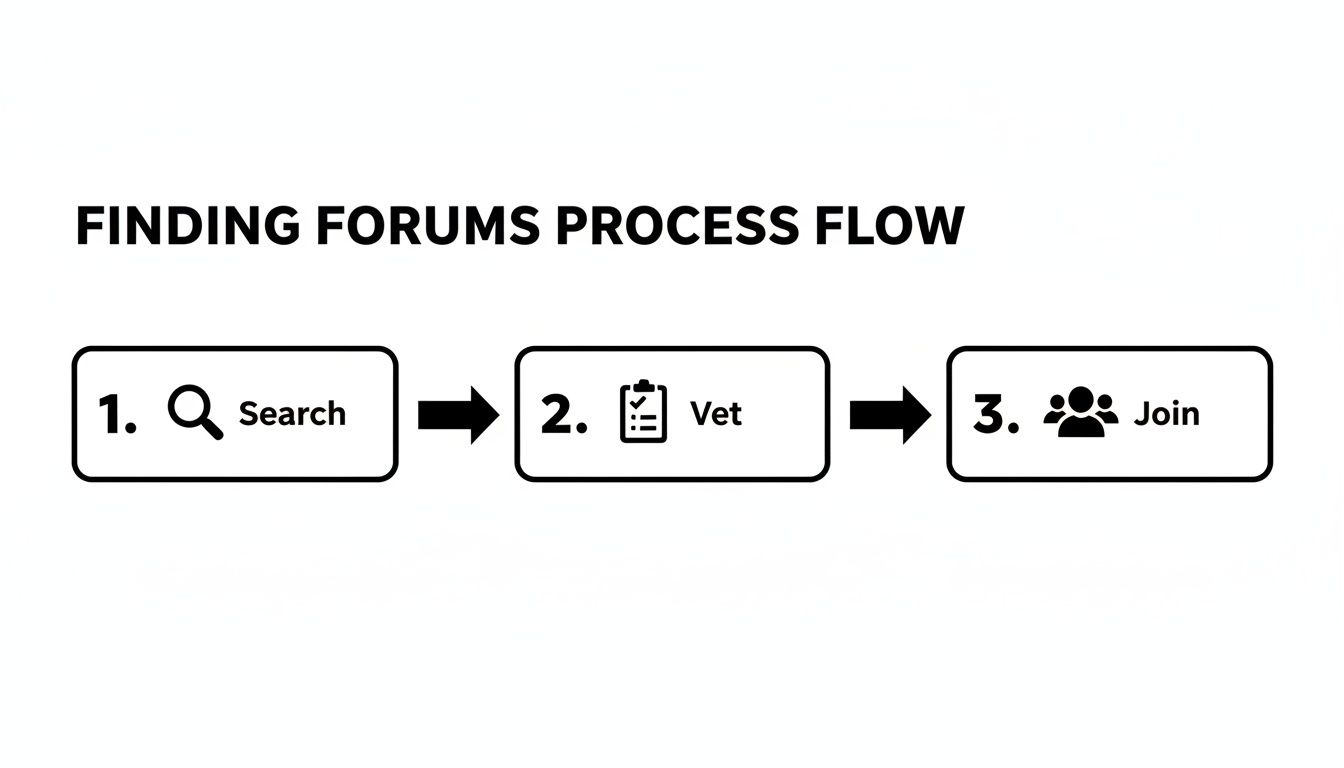
This simple flow—Search, Vet, Join—is all about making sure you only invest your time in communities where genuine participation is possible and actually valued.
Your Three-Week Engagement Plan
Once your profile is set up, resist the powerful urge to start posting right away. True community members listen before they speak. This patient, value-first strategy is what builds the trust that makes your eventual link feel natural and welcome.
Week 1: The Observation Phase
For the first week, your only job is to read. Don't post. Don't comment. Just lurk. Get a feel for the community’s tone, identify who the key contributors are, and understand the types of questions people are asking. This simple step prevents you from making rookie mistakes, like asking a question that’s already been answered a hundred times.
Weeks 2-3: The Contribution Phase
Now it’s time to engage—but still without dropping any links. Find questions you are genuinely qualified to answer and provide detailed, thoughtful responses. Your goal is simply to become a familiar, helpful face. Aim for 5-10 high-quality posts during this phase.
Your initial posts should be 100% value, 0% promotion. Solve someone's problem so thoroughly that they don't need to look anywhere else. This is how you build a reputation that precedes you.
Examples of Value-First Posts
Let's look at how this plays out. Imagine you're an SEO expert for a Kansas City agency, and you're in a forum for small business owners.
Bad Post (Self-Promotional):
"Hey, looks like you need SEO help. My agency is the best in Kansas City. Check out our site for a free audit."
This post is all about you and provides zero immediate value. It will likely get ignored or, worse, deleted by a moderator.
Good Post (Value-First):
"I saw you're having trouble with your local business not showing up on Google Maps. That's a super common issue! Have you checked if your Google Business Profile categories are specific enough? For example, instead of just 'restaurant,' use 'Italian restaurant' and 'pizza delivery.' Also, make sure your business name, address, and phone number are identical across every single directory. Even a small inconsistency can confuse Google."
This response solves the user's problem directly and establishes your expertise without asking for a single thing in return. After a few weeks of providing this level of help, sharing a link to your in-depth blog post on local SEO will be seen as a valuable resource, not spam.
Placing Links That Drive Traffic and Trust

Okay, you've put in the time and established yourself as a genuine, helpful member of the community. Now what? This is when you can start looking for natural opportunities to place a link.
This isn't about spamming your URL in every thread. It’s about being strategic and sharing your resources only when they add real, tangible value to a conversation. Getting this right means understanding the different kinds of forum links and knowing exactly when—and when not—to use each one.
Most forums give you three main places to drop a link. Each one serves a different purpose and carries a different weight, both for SEO and for building trust with other members.
Mastering the Three Types of Forum Links
The most effective strategies for getting backlinks from forums almost always involve a smart mix of all three link types. Knowing which one fits a given situation will make your efforts feel much more organic and, frankly, get you way better results.
Let's break down the main players:
- Profile Links: These are the low-hanging fruit. Nearly every forum lets you add a website link to your user profile or bio. While they have minimal direct SEO value, they're a great first step. They establish your identity and give curious users a passive way to find your site.
- Signature Links: Many forums allow a custom signature that appears under every single post you make. This is a solid spot for a branded link or a subtle call to action. A word of caution, though: moderators often frown upon overly promotional signatures, so keep it tasteful or they might just turn the feature off for you.
- In-Content Links: This is the gold standard of forum link building. An in-content link is one you place directly within the body of a post or a reply. Because it’s contextual and embedded within a helpful, problem-solving answer, it carries the most weight for both users and search engines.
The ultimate goal here is to earn enough trust to place in-content links. A single contextual link inside a detailed, helpful post is infinitely more valuable than a hundred generic signature links.
From Spammy to Strategic Link Placement
The line between a terrible link and a great one really just comes down to intent. Are you genuinely trying to help someone, or are you just looking for a chance to self-promote?
Bad Example (Generic & Spammy):
A user asks for tips on how to improve their website speed. You pop in with:"You should check out my site for SEO tips. We have great services."
This is a terrible approach. It's lazy, offers zero immediate value, and will almost certainly get deleted by a moderator.
Good Example (Helpful & Contextual):
To that same question, you provide a detailed, actionable answer first:"A common culprit for slow WordPress sites is unoptimized images. I'd recommend using a plugin like Smush to compress them. Also, check your hosting—shared hosting can really drag you down. We actually put together a guide on how to build backlinks naturally with fast-loading content that covers a few more technical points you might find useful."
See the difference? This response solves the user's problem first and then offers the link as an optional, additional resource. This is how you build trust, earn respect, and drive qualified clicks.
This entire strategy aligns perfectly with the broader best practices for earning links. You can learn more about this approach in our complete guide on how to build backlinks naturally.
Staying Safe and Avoiding Common Pitfalls
When you're building backlinks from forums, your reputation is everything. It's a delicate game where one careless, spammy move can torch weeks of genuine effort, getting you banned or, worse, flagged by search engines. You have to play the long game here, prioritizing the community's rules and adding real value above all else.
Aggressive self-promotion is the absolute fastest way to get yourself exiled. Moderators and veteran members can sniff out a purely promotional post from a mile away. Little things like stuffing keywords into your posts, dropping completely irrelevant links, or rocking a signature that looks like a banner ad will instantly destroy any trust you’ve managed to build. Always remember, you're a guest in their house.
Navigating Forum Rules and Etiquette
Every single forum has its own set of written and unwritten rules. Blowing past them is a critical mistake. Before you even think about posting a link, you need to spend some time just lurking—get a feel for the local etiquette to avoid the common blunders that can kill your reputation before it even starts.
- Never Link in Your First Post: This is a universal red flag for spam. Just don't do it. Your initial focus should be on providing value and building up a solid posting history.
- Avoid Overly Promotional Language: Phrases like "check out my amazing product" or "we offer the best services" are an immediate turn-off and a one-way ticket to getting your post deleted.
- Respect "Nofollow" Policies: Arguing with mods about link attributes or trying to find clever loopholes is just bad form. If the community is valuable, contribute regardless of the link's direct SEO impact.
Do's and Don'ts of Forum Link Building
Here’s a quick-reference guide to help you stay on the right side of forum moderators and become a respected community member, not a spammer.
| Do | Don't |
|---|---|
| ✅ Read and follow all community guidelines before posting. | ❌ Post the same generic reply in multiple threads. |
| ✅ Provide value in 5-10 posts before ever sharing a link. | ❌ Link to irrelevant landing pages or product pages. |
| ✅ Use a natural mix of branded and naked URL anchor text. | ❌ Use a signature link until you have established a credible presence. |
| ✅ Disclose any affiliation if you are linking to your own products or services. | ❌ Engage in arguments or negative behavior with other members. |
Stick to the "Do's," and you'll be well on your way to building a positive reputation that earns you high-quality links.
Monitoring Your Forum Backlinks
Even when you have the best intentions, you might find yourself with links from low-quality or de-indexed forums. That's why it's absolutely essential to regularly check your backlink profile using a tool like Ahrefs or Semrush. This gives you a clear view of where your links are coming from so you can keep an eye on their quality.
If you start seeing links from spammy or toxic forums pointing back to your site, you may need to step in. In some cases, these unwanted links can actually drag your SEO down. This is where learning how to manage a Google Disavow list becomes a crucial risk management skill. It lets you tell Google to simply ignore these harmful links, protecting the authority you've worked so hard to build.
Proactive monitoring is non-negotiable. Don't wait for a ranking drop to find out you've been linked to from a penalized forum. A monthly backlink audit is a small time investment that can save you from major headaches down the line.
Got Questions About Forum Backlinks? Let's Clear Things Up.
Even with a solid game plan, it's totally normal for questions to pop up when you start diving into forum link building. Let's tackle some of the most common ones I hear, so you can start engaging with confidence.
How Many Forum Links Should I Build Per Month?
Honestly, there’s no magic number. Link velocity—the speed at which you build links—needs to feel completely natural. Forget about hitting a specific quota like "10 links a month." Instead, focus on the quality of your contributions.
Some weeks, you might find five perfect opportunities to drop a genuinely helpful link. Other weeks? Maybe none. Forcing a link where it doesn't fit is the fastest way to get your account flagged as spam. Let real conversations guide your activity, not some arbitrary target. The goal is a steady, organic pace.
Will Nofollow Links From Forums Help My SEO?
Absolutely. It’s a common misconception that nofollow links are worthless just because they don't pass direct link equity or "SEO juice." They are still incredibly valuable for a few key reasons.
For starters, they drive highly relevant referral traffic. They also build crucial brand awareness and help create a more natural, diverse link profile in Google's eyes.
Think of it this way: a single
nofollowlink from a super-popular, niche forum can send more qualified, ready-to-buy visitors to your site than a dozen low-qualitydofollowlinks ever could.
Google is smart enough to see these links as part of a healthy online footprint.
How Do I Measure the ROI of Forum Backlinking?
Measuring the impact of your work is key. You need to look past simple link counts and focus on the metrics that actually show business value.
Here's what I recommend tracking:
- Referral Traffic: Use Google Analytics to see exactly how many people are clicking through to your site from specific forums. Go to
Acquisition > All Traffic > Referralsto pinpoint your top-performing forum sources. - Conversions from Referrals: Take it a step further. Is that traffic actually leading to sales, sign-ups, or demo requests? Set up goals in Analytics to track these actions from your referral traffic.
- Brand Mentions: Keep an eye out for an increase in unlinked brand mentions across the web. This often happens once you become an active voice in key communities.
- Backlink Growth: To see the full picture of your efforts, you need to know how to check backlinks in Google and use professional tools to see how these new forum links fit into your overall profile.
By tracking these KPIs, you can see the tangible return on your time and prove the value of your forum strategy.
Ready to build an authoritative online presence without the guesswork? Website Services-Kansas City specializes in creating powerful SEO strategies that drive real results. Let our experts handle your website development and optimization so you can focus on growing your business.
